Work at heights involves a serious risk from which workers must protect themselves: falls. There is an inherent danger in working at heights, although there are specific mechanisms and measures to prevent it. One of the most important of these is the fall arrest system.
In 2022, in Spain, there were a total of 26,115 occupational accidents due to falls from heights. Of these falls, 775 were considered serious accidents, and 73 were fatal. Training and the correct use of devices such as fall arrest systems are essential to try to reduce these figures.
What is a fall arrest system
The fall arrest system is a set of equipment, compatible with each other, designed to achieve the safe arrest of a worker who suffers a fall. It is made up of several components, such as the fall arrest harness, connectors or connection systems.
The purpose of the fall arrest system is achieved through three objectives:
- To make the vertical distance (downward) traveled by the falling worker as short as possible.
- To stop the fall in safe conditions or with the least possible harm to the employee.
- To ensure that the worker remains suspended, without falling or being injured, until the moment of rescue.
A fall arrest system is composed of several elements. Generally, it has a body grab device and a connecting subsystem.
The fall arrest device, which is usually the fall arrest harness, retains the body of the falling worker. It also ensures that, once braked, the person remains in the correct position .
The connecting subsystems of the fall arrest system can be of various types, such as sliding or retractable. They allow the connection of the gripping device (the harness) to the anchorage device of the support structure.
It is the connection subsystem of the fall arrest system that ensures that the vertical distance traveled in the fall is as short as possible. In addition, it has an energy absorber, which reduces the force transmitted to the worker's body during braking so as not to cause injury.
Wewill now review some of the components that make up the fall arrest system.
Fall arrest system: components
Fall arrest harness
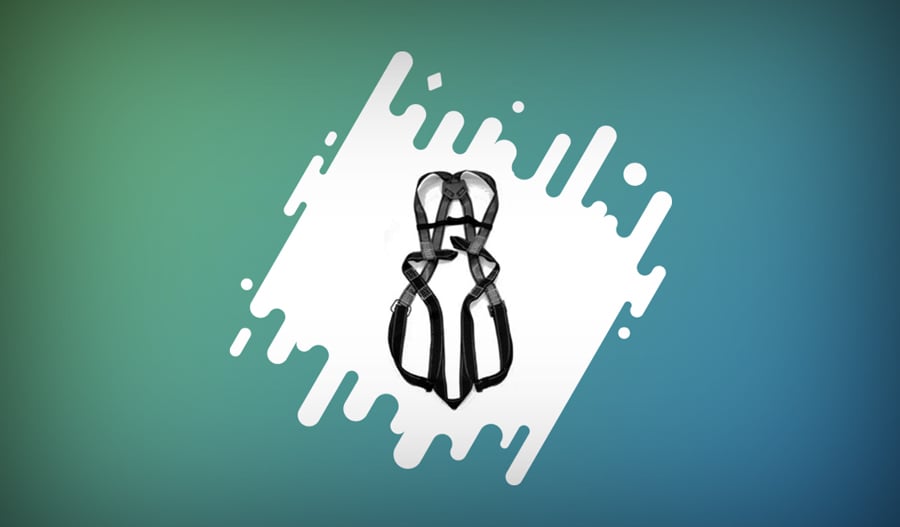
This is a device for holding the body, with bands placed around the shoulders and pelvis area. Its mission is to support the worker's body when the fall occurs and after the fall is arrested .
The fall arrest system harness is designed so that the pressure and forces exerted during the fall are applied to resistant areas of the body.
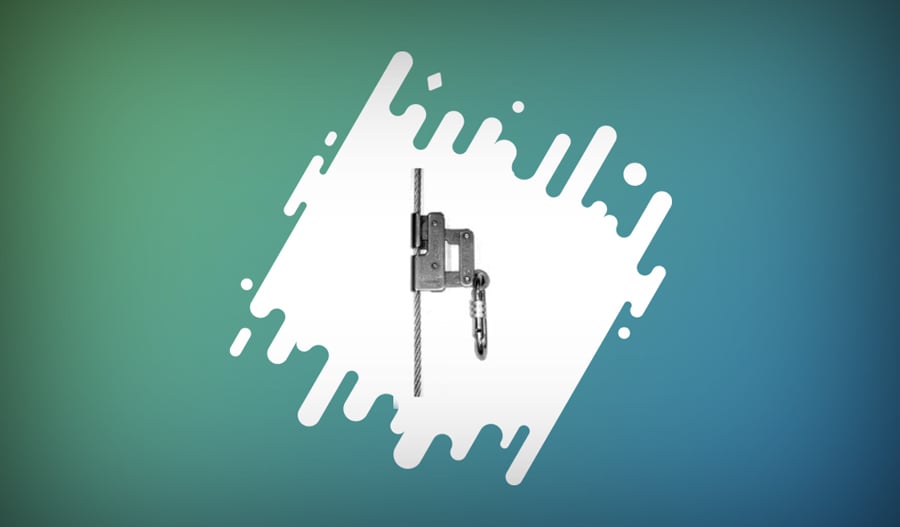
Sliding fall arrester
This connecting subsystem slides over an anchorage line. This line can be flexible, such as a cable or synthetic fiber rope, or rigid, such as a rail.
The sliding device of the fall arrest system has an automatic lock in the event of a fall, to break the fall and dissipate the energy. This component can be connected to the worker's fall arrest harness directly or with the aid of a lanyard.
Retractable fall arrester
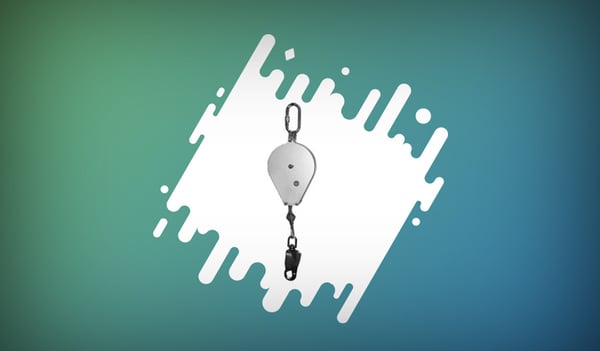
The retractable fall arrester is another type of connection subsystem that a fall arrest system can have . In this case, the lanyard (a cable, synthetic fiber rope, etc.) is coiled inside a drum. The lanyard coils and uncoils to allow lateral movement of the worker, but has a braking mechanism in the event of a fall.
At the free end of the retractable device there is a connector that allows it to be attached to the fall arrest harness.
Connector
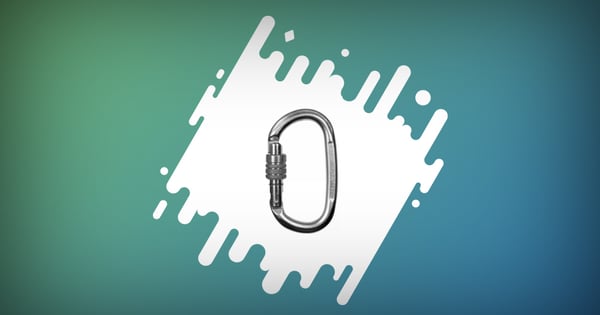
These metallic devices are used to connect the different elements that make up the fall arrest system. The most common connectors are carabiners, which require two consecutive and voluntary movements to open.
If you want to know more about other personal protective equipment (PPE) used for working at heights, click on this link.
It is very important to know this type of fall arrest systems, and that workers receive adequate training to learn how to use them. In recent times, a technology has been incorporated into this type of training, enhancing awareness and realism: virtual reality.
How to work at height safely, step by step
- Assess the risk before climbing: Before starting any work at height, perform a risk assessment: identify the working height, type of surface, weather conditions and potential fall hazards. If the height exceeds 2 meters, the use of fall arrest systems is mandatory according to Royal Decree 2177/2004. Never start work without having completed this assessment.
- Select and check the fall arrest system: Choose the appropriate fall arrest system for the job: fall arrest harness (EN 361), double anchor line (EN 354 + EN 355) and carabiner (EN 362). Before putting it on, visually inspect all components: stitching, buckles, carabiners and the anchorage line.
- Put on the harness correctly: Put on the harness on the ground, never at height. Put your arms through the shoulder straps, adjust the shoulder straps and leg loops so that they are neither too loose nor too tight: a fist should fit between the harness and your body. Check that all buckles are correctly fastened and that the ends of the straps are through their loops. The dorsal connection ring should be centered between the shoulder blades.
- Check the anchorage point: The anchorage point must be certified (EN 795) and capable of supporting a minimum of 10 kN (approximately 1,000 kg). Check that it is fixed to a resistant structure, that it is free of corrosion and damage, and that it is always located above the working position to reduce the free fall distance. Never use pipes, uncertified railings or structures whose strength is unknown.
- Connect the anchor line before you start climbing: Connect the anchor line to the verified anchor point before you start climbing, not once you are at height. If you use a double Y-rope, connect the first hook before releasing the second at each anchor change - at no time should you be disconnected from the system. Make sure the carabiner is properly closed and locked.
- Always maintain an active anchor point during work: During all work at height, maintain at least one active anchor point at all times. When moving or changing position, apply the double anchor technique: connect the new point before releasing the previous one. Keep the anchor line as taut as possible to minimize free fall distance in the event of an accident.
- Descend with the system attached: Always descend with the fall arrest system attached until you are completely on the ground. Upon completion of the work, re-inspect the equipment before stowing it. If the system has suffered a fall - even a short one - remove it from use immediately: energy absorbers and some components are not reusable after a fall. Record the work performed and any incidents observed.
Virtual reality in work at height training
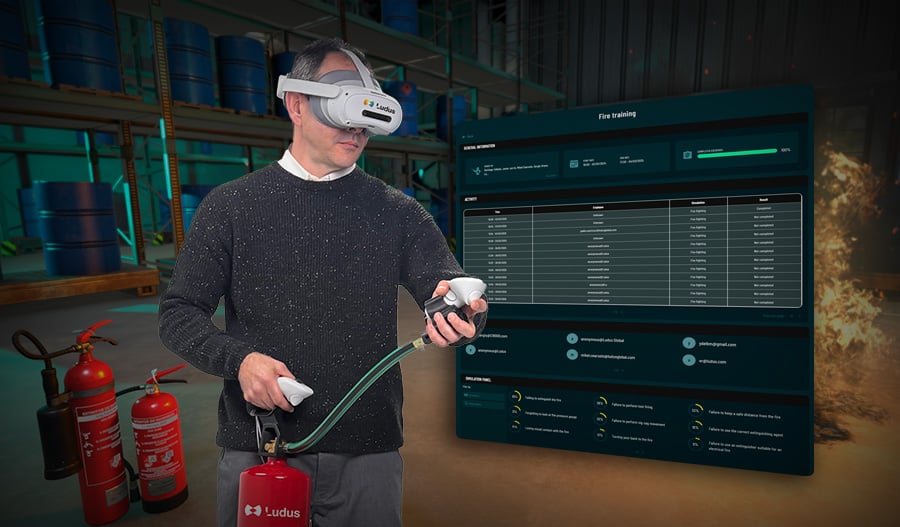
Virtual reality recreates real-world scenarios and situations in simulations, in which the user is immersed with the aid of goggles. This allows the user to experience realistic sensations while interacting in an immersive environment.
Applied to training for work at heights, this technology offers multiple possibilities. The trainer can place the worker at the top of a building to check if he or she is adequately protected. The employee can make decisions or even make mistakes, such as not equipping himself with an appropriatefall arrest system.
Such decision-making training is enhanced by the realism of simulations such as Ludus. If a worker makes a mistake, he or she may suffer a first-person virtual accident , such as a fall from a seventh floor. These variables reinforce the awareness to pay attention, not to let their guard down and not to repeat mistakes in real life .
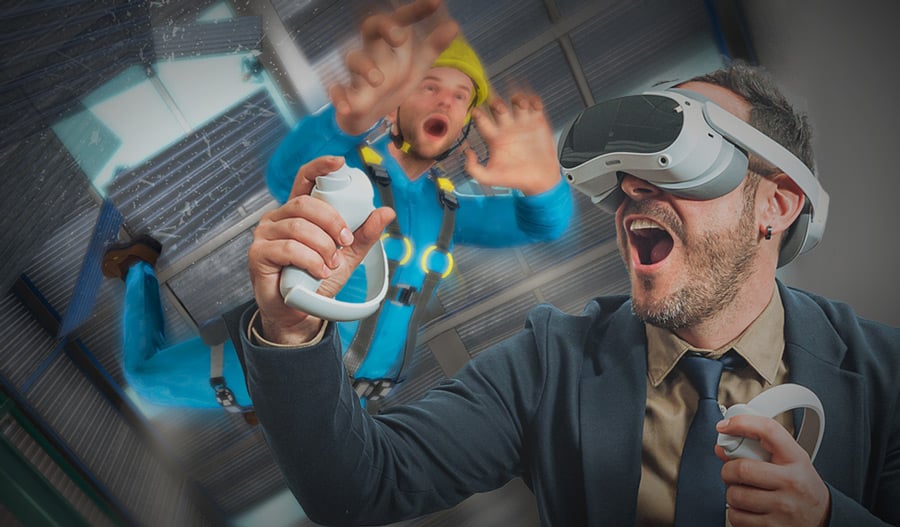
In addition, this technology makes it possible to experience sensations such as acrophobia (known as 'vertigo'), thanks to its realism and immersiveness. Finding out in a simple way if an employee suffers from acrophobia before putting him/her on a crane can be useful.
In Spain, one out of every nine fatal work accidents is caused by a fall from height. Promoting risk prevention training and teaching employees how to protect themselves with mechanisms such as fall arrest systems can save their lives.
---------------------------------------------------------------------------