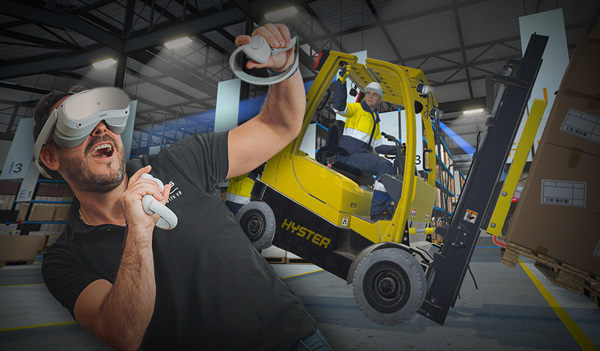
Ludus and PIXO VR are both enterprise VR safety platforms, but they're built on different models. Ludus (HQ Bilbao, Spain; LATAM office Mexico City) is an integrated HSE platform — 23 products across 17 languages, with 700+ exercises, serving 250+ clients across 18 countries and 4 continents, standalone-first with all VR and Mixed Reality products available under one unlimited license. PIXO VR (Royal Oak, Michigan) runs a content-marketplace model via its patented Reality Intelligence Platform™ and PIXO Apex, with AI-assisted low-code authoring (PIXO Create), SOC 2 compliance, and published subscription tiers of $999–$4,399/month.
Choose Ludus for multilingual industrial and fire/CPR training with VR and Mixed Reality. Choose PIXO VR for US English-first enterprise programmes that want a marketplace, AI authoring and SOC 2.
At-a-Glance Comparison
| Dimension | Ludus Global | PIXO VR |
|---|---|---|
| HQ | Bilbao, Spain | Royal Oak, Michigan, USA |
| Model | Integrated HSE catalogue | Content marketplace (PIXO Apex) + custom |
| Library | 23 products, 700+ exercises | Marketplace + 3rd-party (ChalkBites, GWPro, Bodyswaps) + J.J. Keller (16 modules) |
| Authoring | Continuous vendor simulations + tooling | PIXO Create (AI low-code, no developers required) |
| Languages | 17 | English + Spanish (varies by module) |
| Mixed Reality | ✅ Native MR exercises | ❌ |
| SOC 2 | — | ✅ |
| Headset-agnostic | ✅ | ✅ |
| Predictive statistics | ✅ | — |
| Published pricing | Custom quote (hardware can be bundled) | $999 / mid / $4,399 per month tiers |
| Verified clients | Henkel, Coca-Cola, Ford, Moeve, Lear, DHL, Owens Corning, UNOPS | Bosch, Ford, New Jersey Natural Gas, Owens Corning; J.J. Keller partner |
| Best fit | Multilingual industrial, fire/CPR, unlimited license | US enterprise, marketplace + AI authoring |
Content Model: Integrated vs. Marketplace
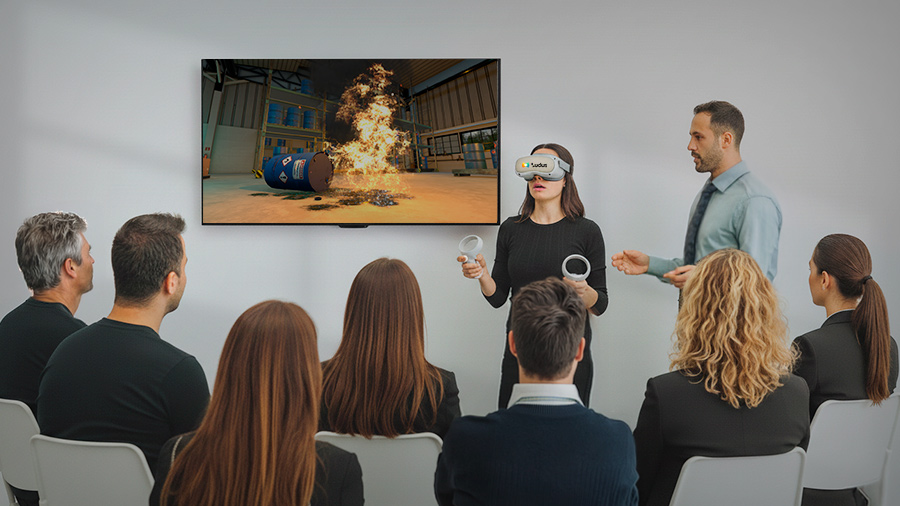
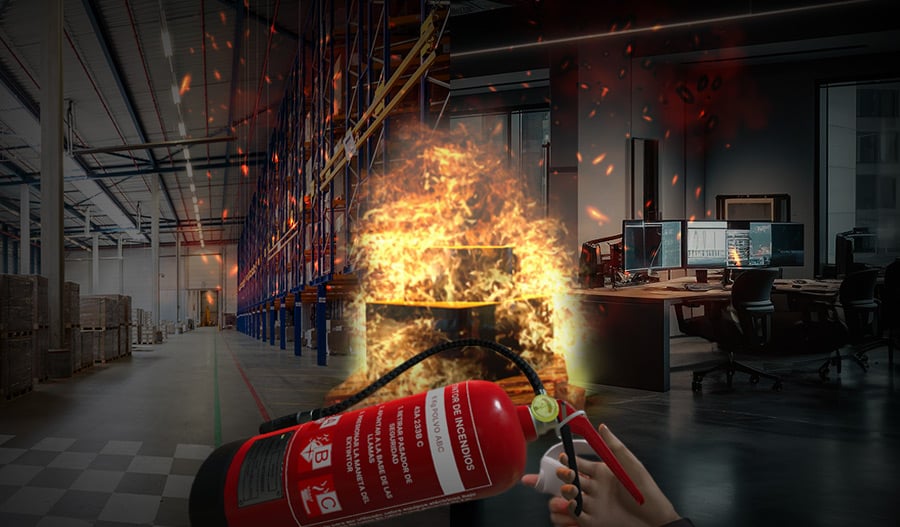
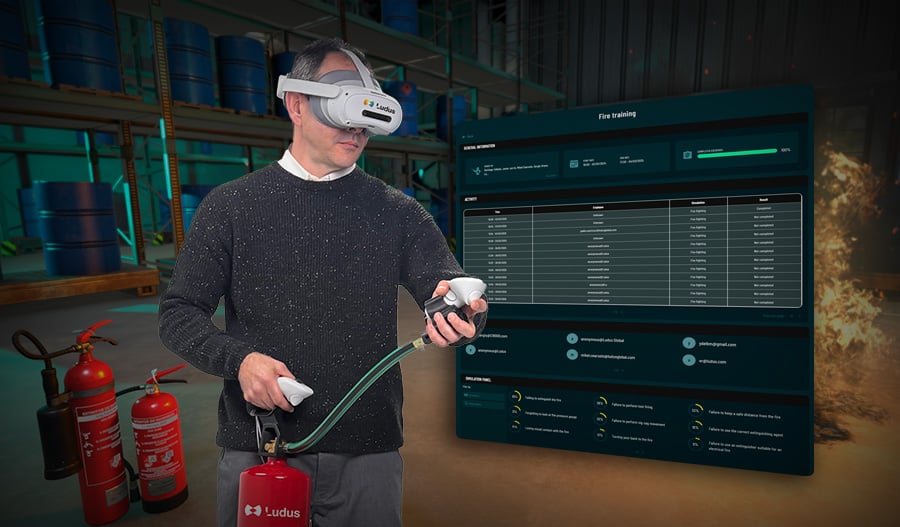
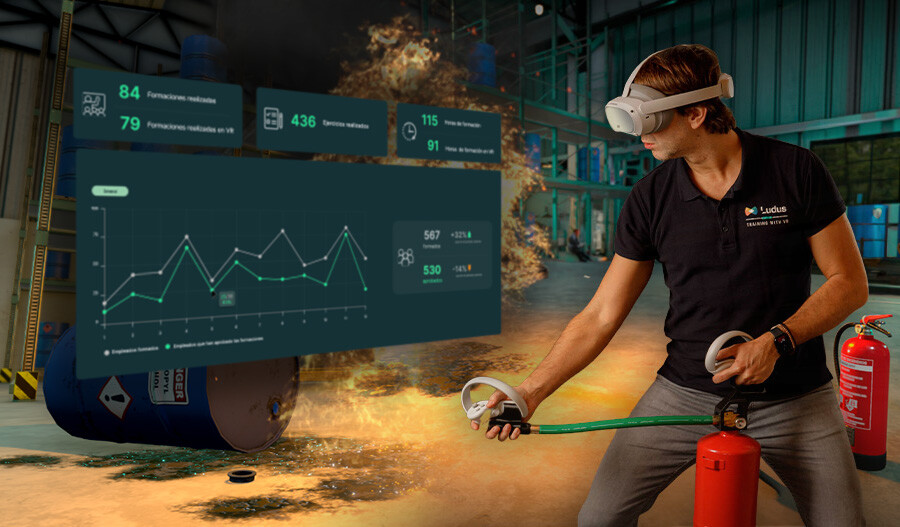
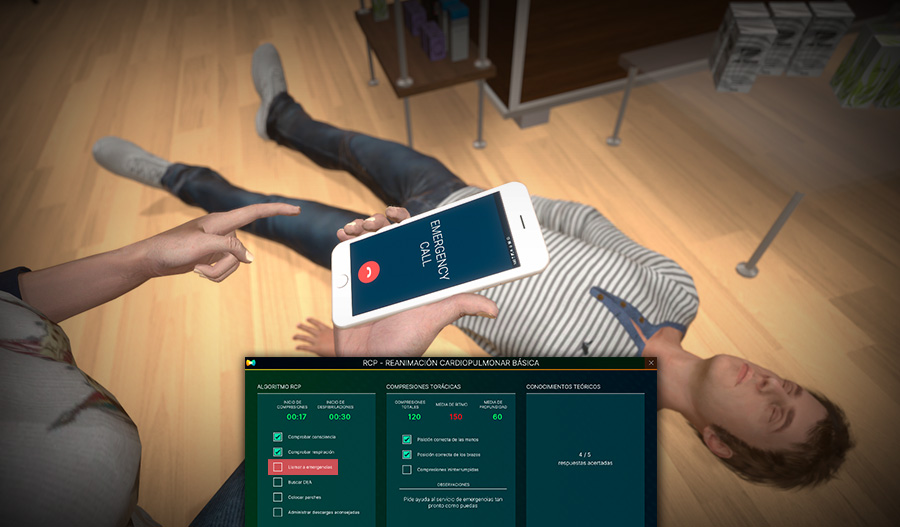
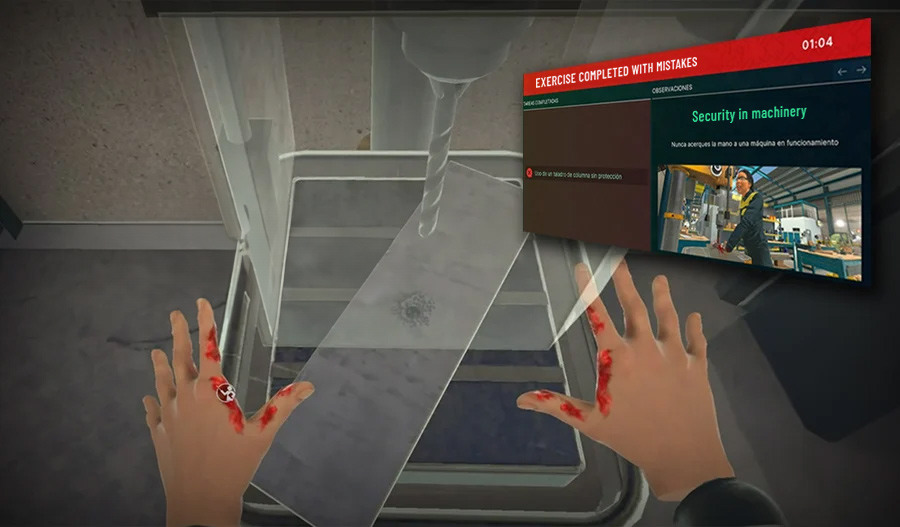
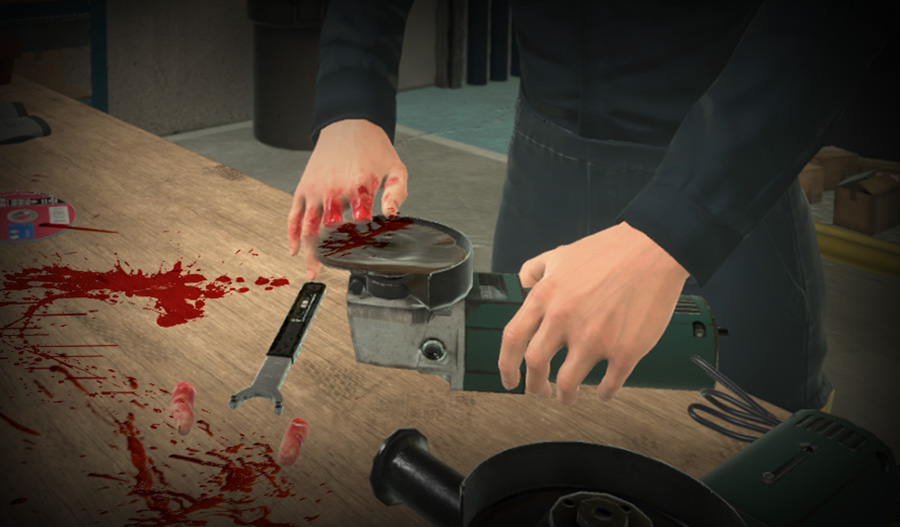
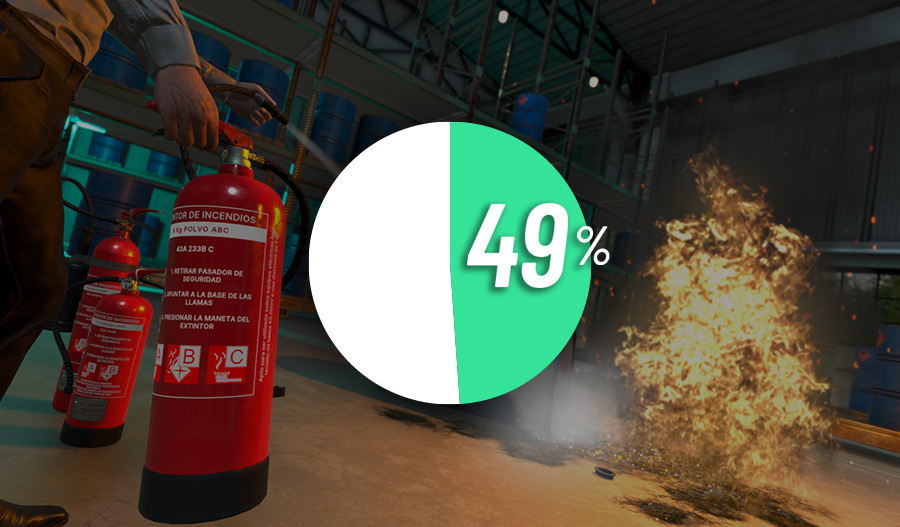
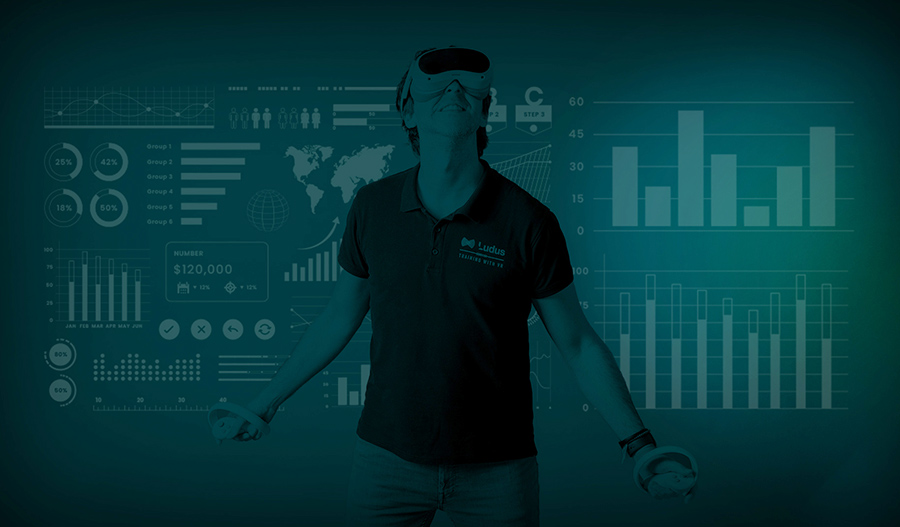
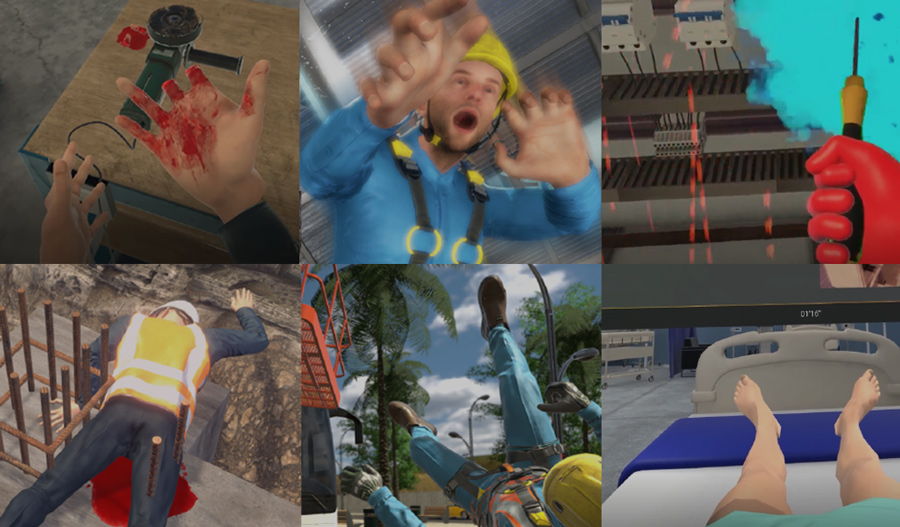
Ludus builds and maintains its own catalogue: 23 products and 700+ exercises across fire extinguishing (with Mixed Reality), confined space, electrical hazards, work at height, hand-injury prevention, plant risk prevention, PPE inspection, risk diagnosis and CPR. Clients get unlimited catalogue access and continuous new/updated simulations as part of the subscription. A predictive statistics dashboard converts session data into diagnostic reports — identifying the most common errors and likely incidents so prevention managers can act before accidents happen.
PIXO VR runs a marketplace via its patented PIXO Apex platform, distributing PIXO's own content, third-party developer content (ChalkBites forklift, GWPro hazard recognition, Bodyswaps soft skills) and custom-built modules. The 2025 J.J. Keller partnership added a 16-module safety library spanning workplace safety, transportation and HR. Platform components include PIXO Create (authoring), PIXO Hub (in-headset experience), PIXO Train (live trainer-led sessions) and PIXO Control (admin/analytics).
Languages & Geographic Fit
- Ludus: content in 17 languages, designed for standardised cross-border training from one license. Strong fit for EU and LATAM regulated markets (Spain, Mexico, Colombia, Peru, Portugal, Brazil, France, Middle East).
- PIXO VR: primarily English, with Spanish content expanded across the catalogue; localisation possible per module. Strongest fit is US English-first enterprise.
For multilingual or LATAM-heavy workforces, Ludus's 17-language native catalogue is the closer fit. For US-domestic English programmes, PIXO's model is well-suited.
Real Client References
PIXO VR publicly cites collaborations and clients including Bosch, Ford Motor Company, New Jersey Natural Gas and Owens Corning. Marc McConathy, Principal Program Lead at one of those clients, noted that PIXO's backend platform "provides a competitive advantage when it comes to scale." The 2025 J.J. Keller partnership embeds 16 PIXO modules into the J.J. Keller learning platform.
Ludus serves 250+ clients across 18 countries on 4 continents, with a 97% subscription-renewal rate. Verified clients include Henkel, Coca-Cola, Ford, Moeve, Lear, DHL, Owens Corning and UNOPS (the United Nations). Ludus operates an extensive ambassador and partner network across LATAM, Spain, Europe and the Middle East, with active expansion into the UK (first UK client live) and Italy.
If procurement requires a US-headquartered, SOC 2-compliant vendor with US enterprise references, PIXO is the easier internal sell. If you need pan-European + LATAM industrial references — including Fortune-500 names like Coca-Cola, Ford, Henkel, DHL and Owens Corning, plus UNOPS at the UN — Ludus's base applies directly.
Custom Authoring & Build Timelines
- Ludus: the catalogue is continuously expanded and updated by Ludus; clients receive new simulations and updates as part of the subscription, plus a predictive analytics layer — no build burden on the client.
- PIXO VR: PIXO Create is a low-code, AI-assisted authoring tool that lets clients build modules in-house. Vendor-built custom content typically takes 14–16 weeks, priced by length and complexity.
If you want to build modules in-house with AI assistance, PIXO Create is the stronger self-serve story. If you'd rather a vetted HSE catalogue continuously maintained for you, Ludus removes the build burden entirely.
Pricing
- PIXO VR: subscription model widely reported at $999 to $4,399 per month (modules + headset count + LMS at the top tier). Custom builds priced separately.
- Ludus: custom per-seat subscription; can include the full hardware kit, maintenance and updates. Request a quote →
Ask both vendors for: per-learner pricing at your seat count, custom-content cost and timeline, hardware/refresh strategy, and pilot terms.
Hardware & Compliance
| Ludus | PIXO VR | |
|---|---|---|
| Headset-agnostic | ✅ Most VR equipment | ✅ Headset-agnostic |
| Native Mixed Reality exercises | ✅ | ❌ |
| Predictive statistics dashboard | ✅ | — |
| Controller-free hand tracking | ✅ Select simulations | — |
| SOC 2 compliance | — | ✅ |
| Multi-user | ✅ | ✅ |
| LMS integration (SCORM / xAPI) | ✅ | ✅ (via PIXO API) |
Ludus's Mixed Reality and hand-tracking give it a tactile-realism edge for fire and CPR training. PIXO's SOC 2 compliance and multi-user capability are advantages in US enterprise procurement.
Customer Fit: Who Picks Which
Ludus is the better fit when you are:
- A multilingual industrial operation (17-language catalogue, EU/LATAM)
- Running pan-European + LATAM programmes wanting Fortune-500 references (Henkel, Coca-Cola, Ford, DHL, UNOPS)
- Looking for unlimited platform access and continuous catalogue updates
- Focused on proactive risk targeting via a predictive statistics dashboard
PIXO VR is the better fit when you are:
- A US English-first enterprise
- Wanting a content marketplace + AI low-code authoring to build in-house
- Requiring SOC 2 compliance and multi-user training for procurement
- Preferring published subscription tiers ($999–$4,399/mo)
Frequently Asked Questions
What is the main difference between Ludus and PIXO VR?
Ludus: integrated multilingual HSE catalogue (23 simulations, 700+ exercises, 17 languages), standalone VR + Mixed Reality. PIXO VR: US marketplace model (PIXO Apex) with AI authoring (PIXO Create), SOC 2 compliance, $999–$4,399/mo tiers.
How much does PIXO VR cost?
Reported at $999–$4,399/month by modules and headset count; custom builds (~14–16 weeks) are priced separately. Ludus is custom per-seat and can bundle hardware.
Who uses PIXO VR?
Publicly cited: Bosch, Ford, New Jersey Natural Gas, Owens Corning; 2025 J.J. Keller partnership (16 modules).
Who uses Ludus?
Publicly cited: Henkel, Coca-Cola, Ford, Moeve, Lear, DHL, Owens Corning and UNOPS (the United Nations).
Does PIXO support custom content?
Yes — PIXO Create (AI low-code). Vendor-built content takes approximately 14–16 weeks.
Which is better for fire and CPR training?
Ludus — standalone VR + Mixed Reality exercises + controller-free hand tracking.
Which is better for US enterprise procurement?
PIXO VR — US HQ, SOC 2 compliant, multi-user, published pricing tiers.
Which supports more languages?
Ludus (17 native HSE languages) vs PIXO (English + expanded Spanish).
Can I run a pilot?
Both offer evaluation paths — request pilot/trial terms for your seat count.
See Ludus Head-to-Head with PIXO VR
Run your actual hazard scenarios through the simulator. Book a live 20-minute Ludus demo — fire response, electrical, CPR, or your choice — and benchmark it directly against PIXO.
Related resources:
- The Ludus VR safety training platform — 23 products across 17 languages, with 700+ exercises
- All training simulations — full catalogue
- CPR & first-aid VR simulation — real-time compression feedback
- Confined spaces VR simulation
- Best Safety Training Software 2026: 11 platforms compared
- Ludus vs Pixaera
- Ludus vs Immersive Factory
- VR Safety Training: What It Is, How It Works & Why It's Replacing Classroom Training
- Workplace safety law & VR: Italy leads the EU regulatory shift
Sources
- Ludus Global. Platform, Pricing, Developers & News pages. ludusglobal.com/en
- PIXO VR. Homepage, Platform, Apex, Pricing, FAQ & Press pages. pixovr.com
- Humulo. VR Forklift Training: PIXO vs Humulo vs Transfr. March 2026.
Disclosure: this comparison is published by Ludus Global and reflects publicly available information about each platform as of May 2026.
---------------------------------------------------------------------------
Would you like to implement Ludus' Virtual Reality in your health and safety training?
Fill out this form to receive information about the options best suited to your company's needs.